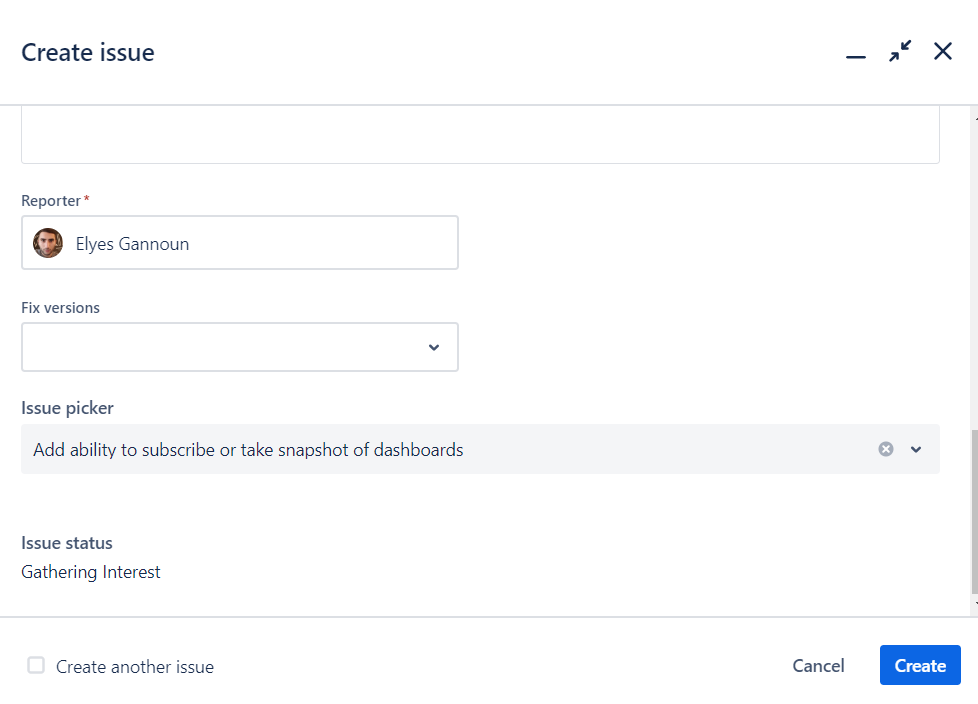
Snapshot
If not dependencies are needed on this field or if the dependency is based on the display value, you should use this type.
You get what you configure!
-
For select list, you can use our template language: ${row.name}
-
For read-only, you can use our template language: ${data.name}
More info on this page.
Object
With this type, you will be able to configure 2 attributes that you could use in Connect custom field queries:
-
ID (.id)
-
Template (.value)
Both attributes stores values as a String type
Only the value configured in the attribute Template will be displayed in the issue.
-
For select list, you can use our template language: ${row.name}
-
For read-only, you can use our template language: ${data.name}
About the attribute ID, it is stored directly in the object and is useful when used in dependencies.
For all object-type fields, we recommend you specify in the dependency which attribute is to be used.
If you don't, then the id attribute will be used.
If customfield_10097 is type Object; with:
"customfield_10097": {"id": "LG","value": "nom: LG"},
Then:
SELECT "Cell_phones"."salePrice", "Cell_phones"."name", "Cell_phones"."color"
FROM "Cell_phones"
WHERE "Cell_phones"."name" = '$issue.customfield_10097'
will retrieve "LG"
It uses the same templating language:
-
For select list, you can use our template language: ${row.name}
-
For read-only, you can use our template language: ${data.name}
There are a few limitations that we know of, available here.
If you face other limitations, please create a ticket to our support platform
Use case - Get information from issues in Atlassian's Jira
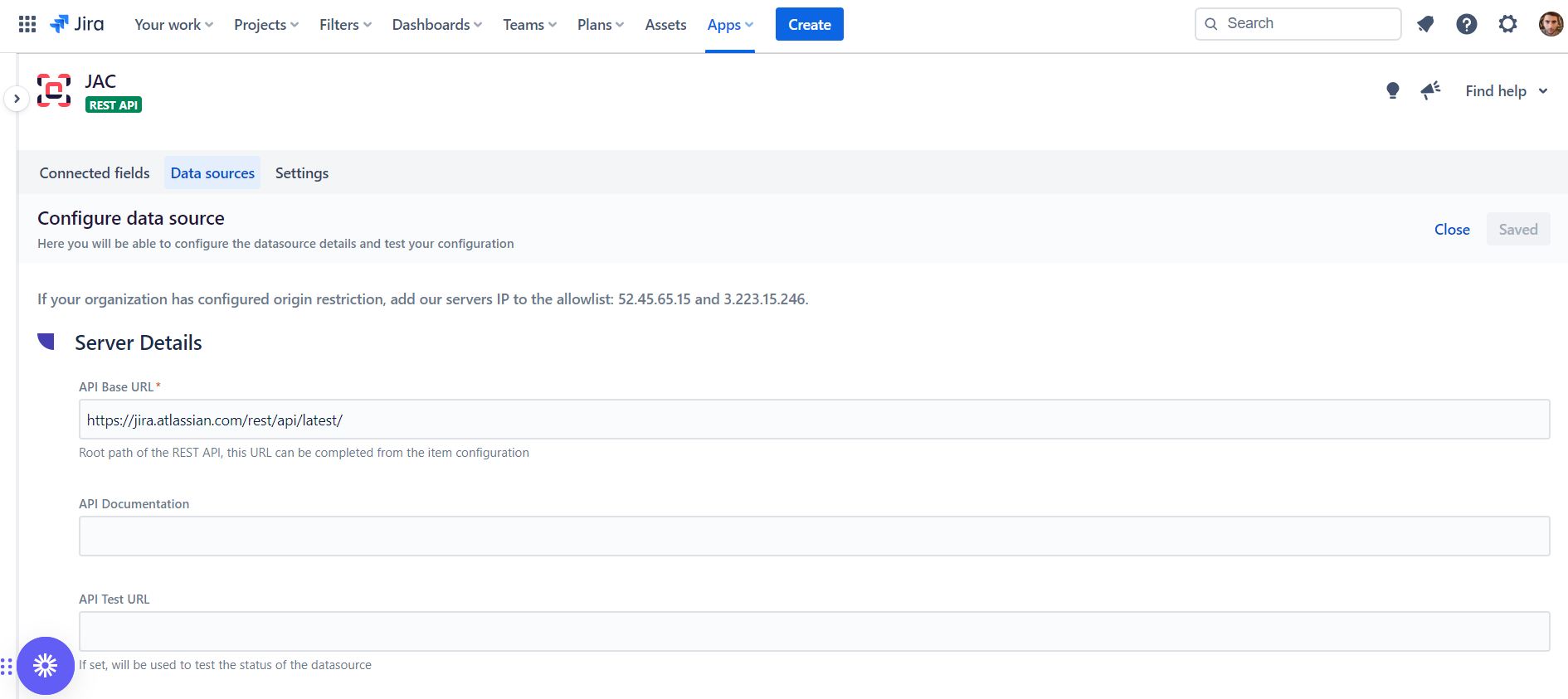
Configure the data source
For this use case, you'd only need the following base URL:
-
API Base URL: https://jira.atlassian.com/rest/api/latest/
Create the issue picker field
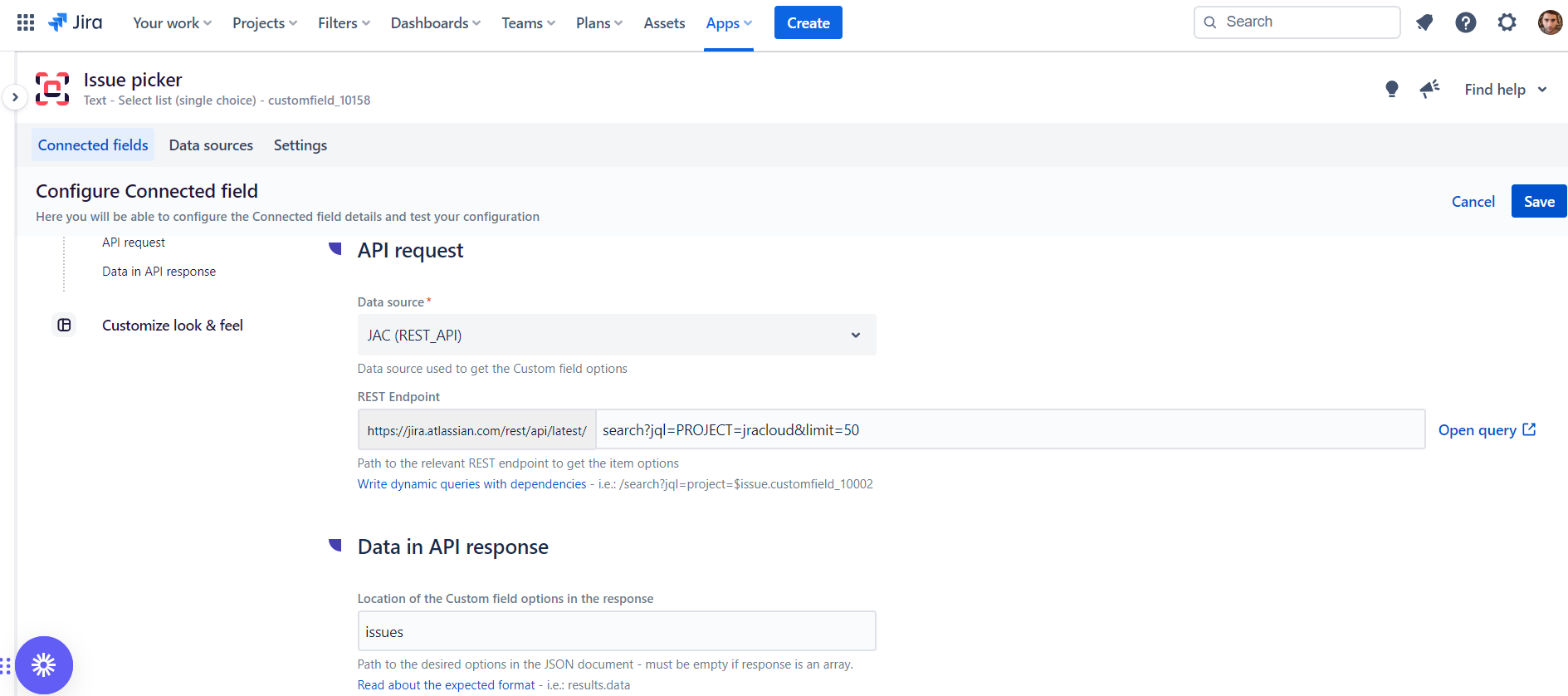
-
Configure the following endpoint: search?jql=PROJECT=jracloud&limit=50
-
Configure the Data in API response: issues
-
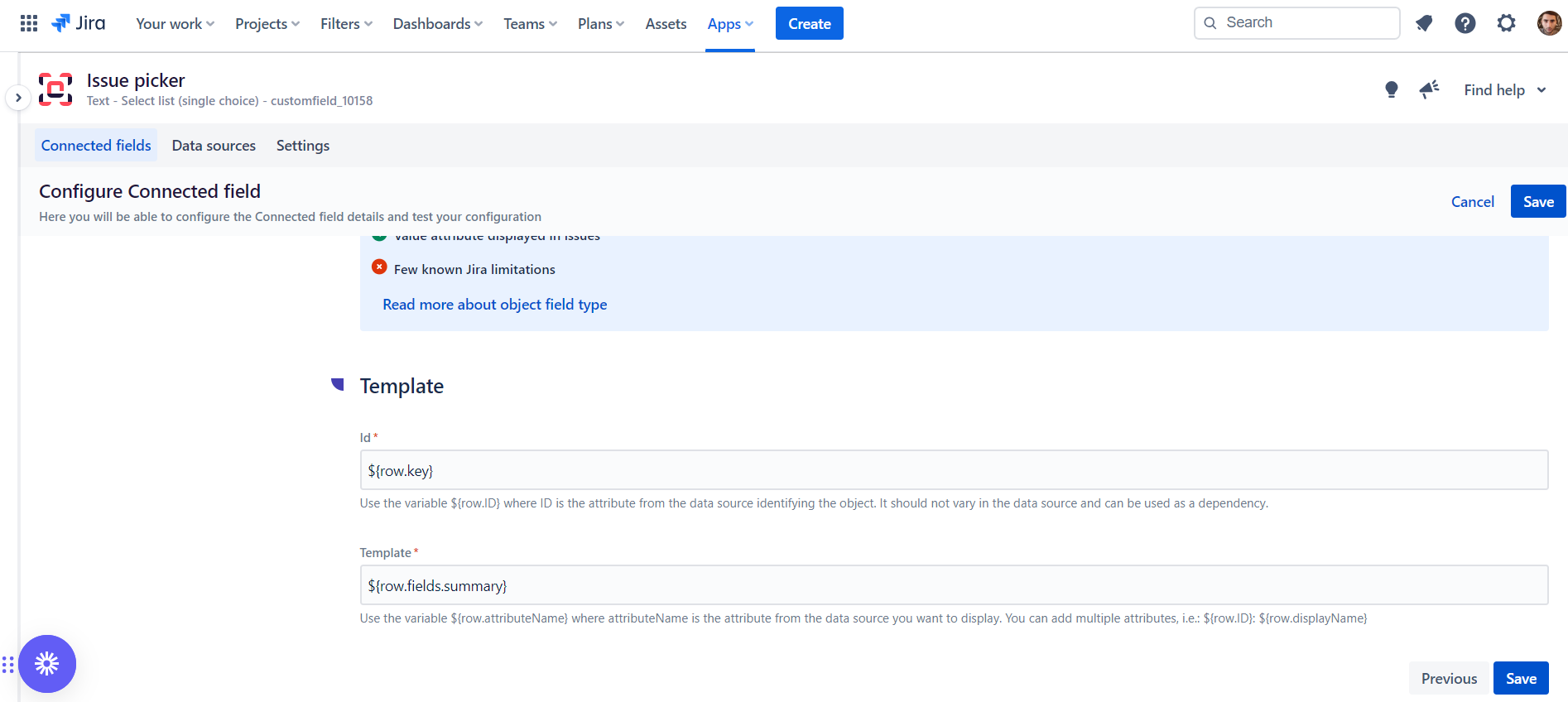
Select the "Object" type:
-
ID: ${row.key} (this will store the issue key in the attribute ID)
-
Template: ${row.fields.summary} (this will display the issue summary in the custom field)
-
Create the status field
-
Create a new custom field of Read-only type.
-
Select the Snapshot mode in the look and feel tab
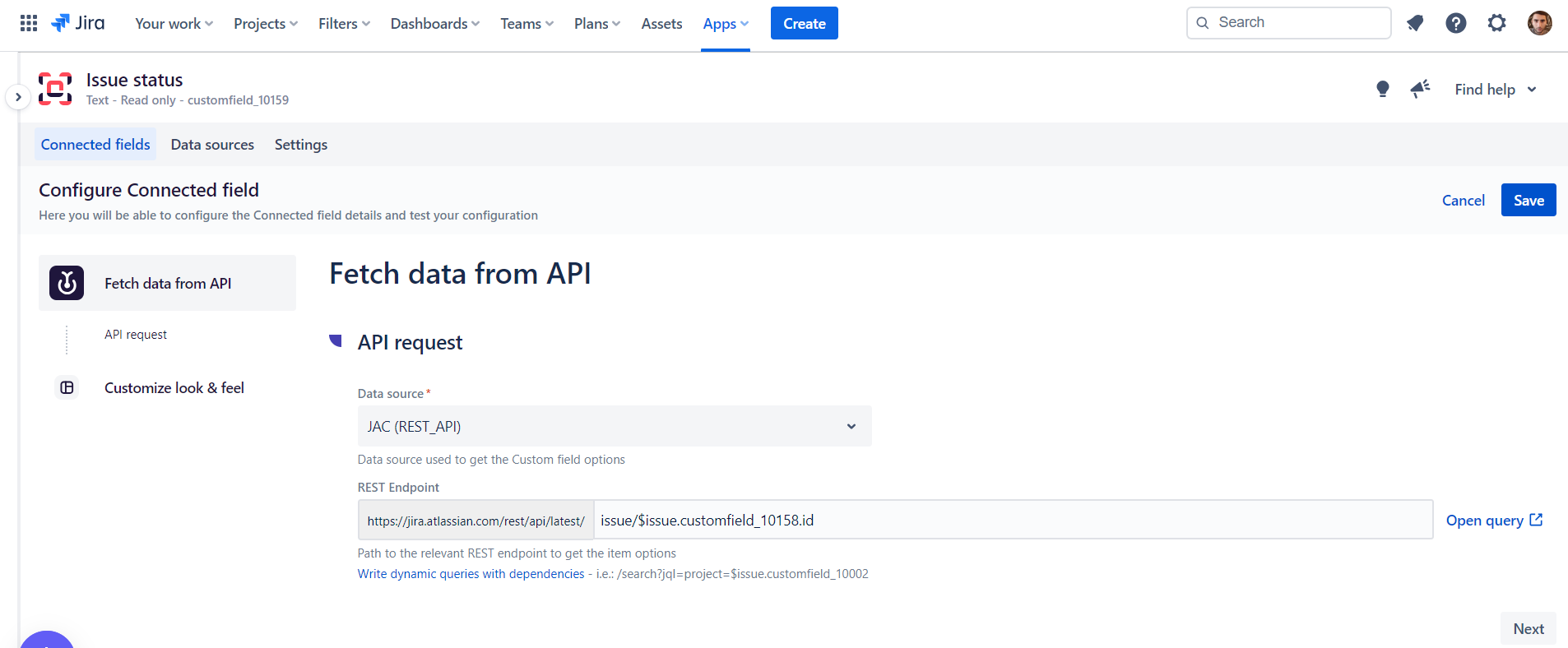
For the REST Endpoint, configure the following: issue/$issue.customfield_10158.id
The variable will be replaced by ${row.key} as it's the value stored in the parent ID attribute
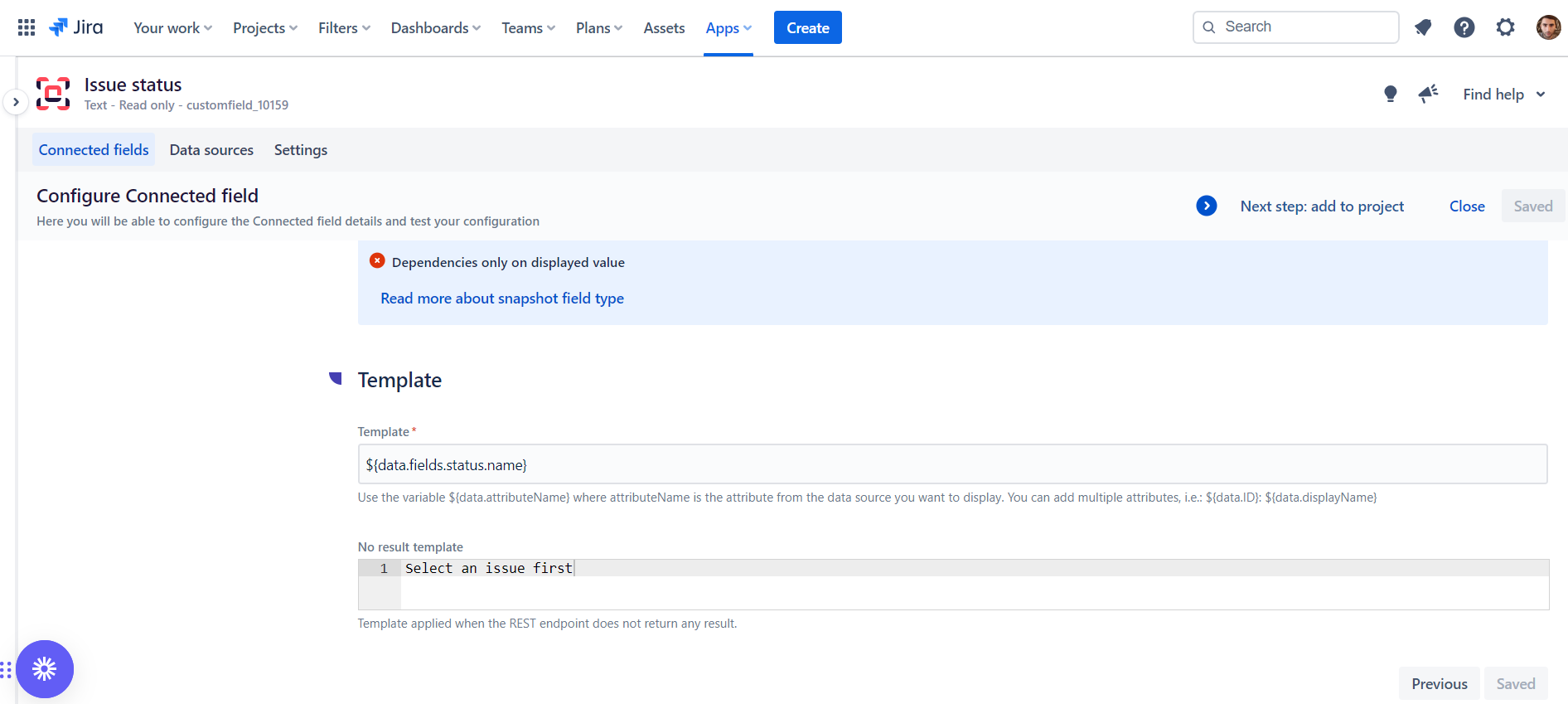
Configure the following template to display the issue status: ${data.fields.status.name}
Results