
Once your survey is activated, it does not send itself automatically. Dispatching the survey to employees is handled through Automation, giving your team full flexibility over when, how, and to whom the survey is sent.
This deliberate separation means you are not locked into a single trigger — you can adapt the automation rule to match your team's processes, whether that means sending the survey on ticket resolution, after a specific status change, or targeted at a particular request type or project.
Setting up your automation rule
-
Head to Automation and create a new rule (or update an existing one) — use the Open Automation Configuration shortcut to get there directly.
-
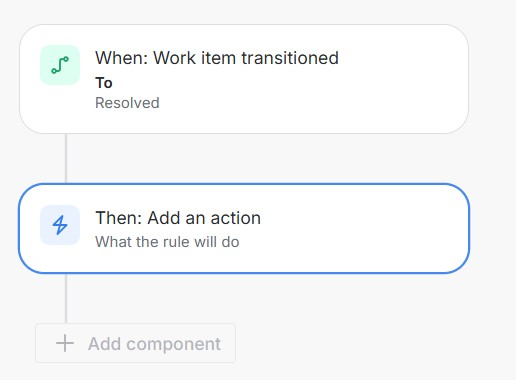
Select the trigger. Choose Work item transitioned, and set it to the status that should enable the survey — typically Resolved.
-
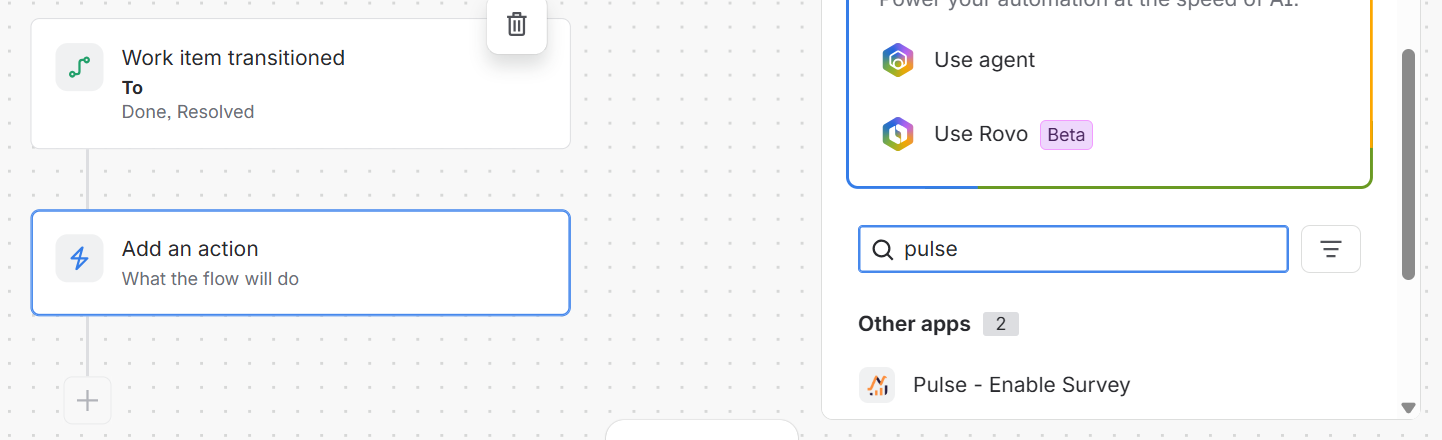
Add the Pulse action.
-
Search for and select Pulse - Enable Survey.
-
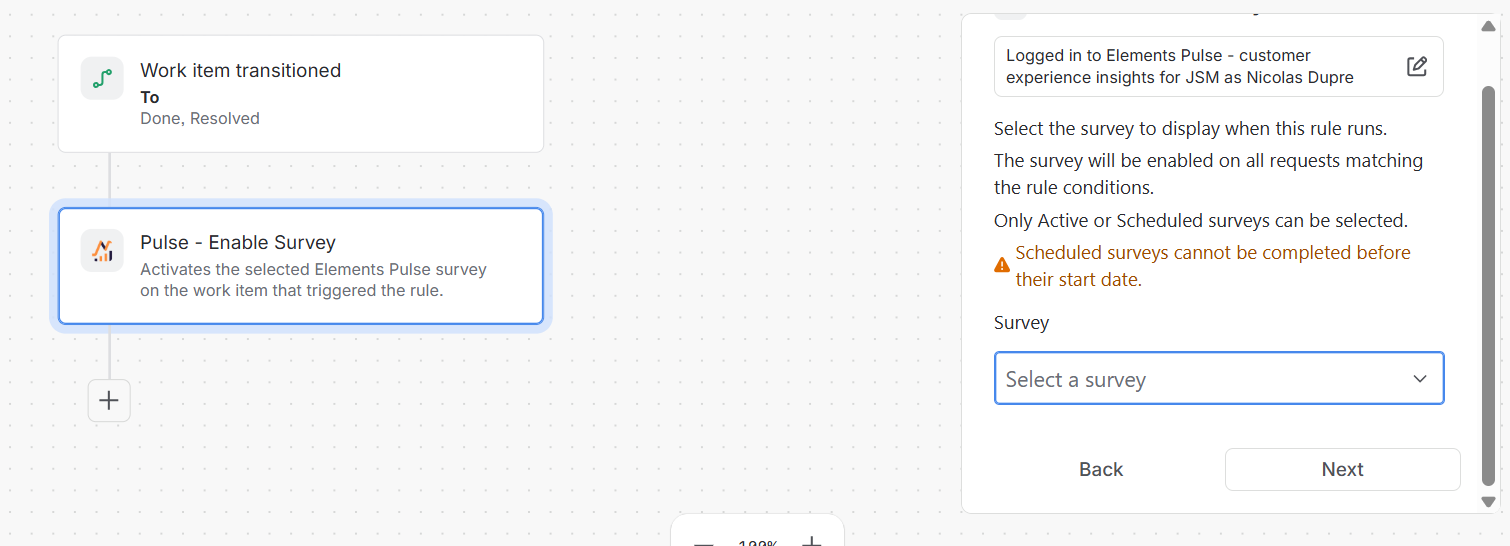
Choose which survey to enable. Only Active or Scheduled surveys can be selected.
-
This action activates the survey on the request. Once enabled, an Answer survey button appears directly on the request.
-
-
Configure the customer notification.
-
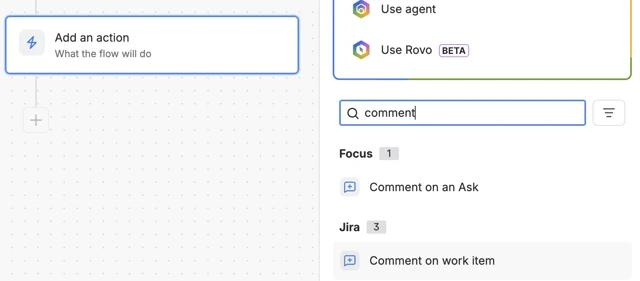
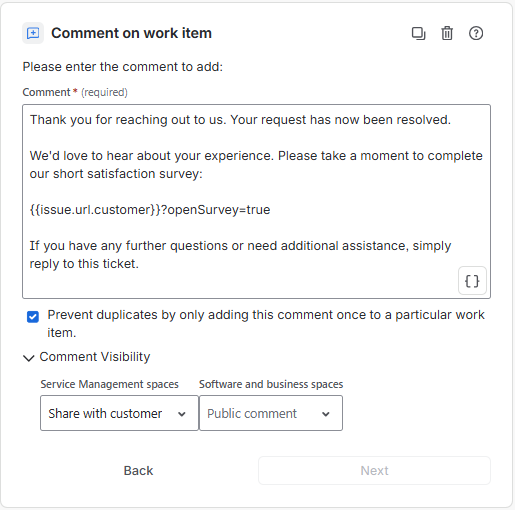
Add a Comment on work item action, set its visibility to Share with customer, and check Prevent duplicates so the comment is only added once per request.
-
Write the message that will be sent to your customer. It should include a link to open the survey, using
{{issue.url.customer}}?openSurvey=true. You can start from the Copy message template button and adjust the wording to match your tone. -
Customers can also open the survey anytime via the Answer survey button on the request, so the link in the comment is a convenient shortcut, not the only way in.
-
This is customer-facing — a clear, friendly message improves response rates. You can access the Automation guide again at any time from the survey list.
Why Automation?
Delegating survey dispatch to JSM Automation means you are not limited to a single, fixed trigger. Here are a few examples of what you can do:
-
Target a specific team or project — send a CES survey only to tickets handled by your network team, to measure the effort employees face when reporting connectivity issues.
-
Segment by request type — send a CSAT survey after hardware provisioning requests are resolved, and a separate NPS survey for software access requests, to compare satisfaction across service categories.
-
Control timing — trigger the survey a few hours after resolution rather than immediately, giving employees time to confirm their issue is truly resolved before rating the experience.
-
Avoid survey fatigue — combine the Prevent duplicates option with automation conditions to limit how frequently a given employee receives a survey, for example by filtering on specific queues or priorities.
-
Bundle with other actions — send the survey link as part of a broader resolution message that also includes a satisfaction follow-up or a link to your IT knowledge base, all within a single automation rule.